Resource Hub
Explore the Clinical Validation and Innovation behind PrecisionOS
*Over 20+ peer-reviewed publications and institutional case studies.
Clinical Validation & Research
New Publications
Errors in implant orientation estimation in novice vs. experienced surgeons during reverse shoulder arthroplasty for a superior glenoid wear pattern
Lohre R, Bois A, Lapner P, Pollock JW, Athwal GS, Goel DP. Errors in implant orientation estimation in novice vs. experienced surgeons during reverse shoulder arthroplasty for a superior glenoid wear pattern. JSES International. 2025 Jan 16;9(2):100612. doi: 10.1016/j.jseint.2024.12.008.
Glenoid baseplate orientation in reverse shoulder arthroplasty (RSA) significantly influences clinical outcomes, complications, and failure rates. Novel technologies have been produced to decrease performance heterogeneity of low- and high-volume surgeons. This study evaluated the ability of both novice and experienced shoulder surgeons to accurately estimate glenoid component orientation in an intra-operative scenario. The research highlights the significant variability in visual estimation and underscores the critical importance of hands-on learning, skill transfer, and immersive technology to improve implant accuracy across all experience levels.
Opportunities for Remote Surgeon-to-Surgeon Education: A Novel Use Case for Immersive Virtual Reality
Lohre R, Goel DP, Williams J, Rahman O, Ochiai D. Opportunities for Remote Surgeon-to-Surgeon Education: A Novel Use Case for Immersive Virtual Reality. Journal of Orthopaedic Experience & Innovation. 2024;5(1).
Hip arthroscopy for the treatment of altered hip morphology contributing to femoroacetabular impingement syndrome (FAI) has been shown in large randomized trials to be beneficial and superior to conservative management. However, common complications are significant for low-volume surgeons, and the procedure is associated with an unexpectedly steep learning curve. This publication details how the addition of contemporary, immersive virtual reality (iVR) simulator education serves as an effective means for both novice and expert surgeons to master the complex, high-stakes tasks of hip arthroscopy, reducing anxiety and increasing technical efficiency prior to real-world operations.
The Evolution Of Surgical Education And Training
Die Evolution der virtuellen Realität in der Schulter- und Ellenbogenchirurgie
Lohre R., Athwal GS, Warner JP, Goel DP Die Evolution der virtuellen Realität in der Schulter- und Ellenbogenchirurgie. 2020. Journal of Shoulder and Elbow Surgery International. 2020, 4(2): 215-223
The use of virtual reality (VR) in shoulder and elbow surgery has varying levels of evidence, from I to IV, and typically involves educational randomized controlled trials. However, the terms and definitions used in the literature are often redundant, confusing, or outdated. The purpose of this review was to characterize previous uses of VR in shoulder and elbow surgery in preoperative, intraoperative, and educational domains, including trauma and elective surgery.
Effectiveness of Immersive Virtual Reality on Orthopedic Surgical Skills and Knowledge Acquisition Among Senior Surgical Residents
R. Lohre, A. Bois, GS Athwal, P. Lapner, J. Pollock, DP Goel. Wirksamkeit der immersiven virtuellen Realität auf orthopädische chirurgische Fähigkeiten und Wissenserwerb bei älteren chirurgischen Assistenzärzten: Eine randomisierte klinische Studie JAMA Network Open. 2020, 3(12):e2031217
Immersive Virtual-Reality (iVR)-Simulatoren werden für das chirurgische Training immer interessanter. Die Trainingseffektivität von iVR im Vergleich zu Videotraining beim Erwerb komplexer Fähigkeiten wurde mithilfe einer randomisierten, interventionskontrollierten klinischen Studie untersucht, an der erfahrene orthopädische Chirurgen aus mehreren Institutionen in Kanada während eines einzigen Trainingskurses teilnahmen. Das chirurgische Training mit iVR zeigte eine überlegene Lerneffizienz, Wissens- und Fähigkeitsübertragung.
Immersive Virtual Reality: Ein Paradigmenwechsel in Bildung und Ausbildung
Ryan Lohre, MD and Danny P. Goel, MD, MSC, FRCSC, AAOS Now, “Immersive Virtual Reality: A Paradigm Shift in Education and Training”, January 2020.
The training of both aspiring and established surgeons remains rooted in the historic model of mentorship coupled with direct learning on patients. Yet, beyond the classic Halstedian “see one, do one, teach one” method of learning, there are other well-researched learning methods that virtual reality supports. Applying computing power and modern, highly realistic graphics creates an immersive operating environment that affords repetition of procedures with infinite variability. Trainees test their skills, make mistakes, accept feedback, reflect, and then repeat until they achieve proficiency. This has the potential for more rapid and efficient learning gained through greater experience, creating an accelerated path to mastery.
Virtual Reality in der Wirbelsäulenendoskopie: ein Paradigmenwechsel in der Ausbildung zur Unterstützung von Wirbelsäulenchirurgen
Ryan Lohre, Jeffrey C. Wang, Kai-Uwe Lewandrowski, Danny P. Goel, J Spine Surg, “Virtual reality in spinal endoscopy: a paradigm shift in education to support spine surgeons,” January 2020
Mit den technologischen Fortschritten in der Computerverarbeitung verbessert sich der Stand der Virtual-Reality-Simulation für die Ausbildung in der Neurochirurgie und orthopädischen Chirurgie weiter. Seine Verwendung wurde von medizinischen Gesellschaften und Organisationen befürwortet, und es gibt eine wachsende Zahl von Unterstützung in der medizinischen Literatur. Ein systematischer Review umfasste 38 separate Studien, die den Einsatz von Virtual Reality, Augmented Reality und Mixed-Reality in einer Vielzahl von Verfahren veranschaulichen. Die Studien fanden eine Verbesserung sowohl der technischen Fähigkeiten als auch der Patientenergebnisse in der kurzfristigen Nachbeobachtung.
Verbesserter Erwerb komplexer Fähigkeiten durch immersive virtuelle Realität
Lohre R., Bois A., Athwal GS, Goel DP CSES. Verbesserter Erwerb komplexer Fähigkeiten durch immersive virtuelle Realität: Eine randomisierte kontrollierte Studie. J Bone Joint Surg Am. 2020, 102(6):e26
Der Zweck dieser multizentrischen, verblindeten, randomisierten, kontrollierten Studie bestand darin, die Gültigkeit und Wirksamkeit des immersiven Virtual-Reality-Trainings (iVR) in der Ausbildung von Assistenzärzten in der Orthopädie zu bestimmen. Der Fokus lag auf der Erzielung einer optimalen Glenoidfreilegung. IVR demonstrierte einen wesentlich verbesserten Erwerb von translationalen technischen und nicht-technischen Fähigkeiten gegenüber traditionellem Lernen. Darüber hinaus demonstrieren die Ergebnisse die Gesichts-, Inhalts-, Konstrukt- und Transfervalidität für iVR.
Die Evolution der virtuellen Realität in der Schulter- und Ellenbogenchirurgie
Lohre R., Athwal GS, Warner JP, Goel DP Die Evolution der virtuellen Realität in der Schulter- und Ellenbogenchirurgie. 2020. Journal of Shoulder and Elbow Surgery International. 2020, 4(2): 215-223
The use of virtual reality (VR) in shoulder and elbow surgery has varying levels of evidence, from I to IV, and typically involves educational randomized controlled trials. However, the terms and definitions used in the literature are often redundant, confusing, or outdated. The purpose of this review was to characterize previous uses of VR in shoulder and elbow surgery in preoperative, intraoperative, and educational domains, including trauma and elective surgery.
Effectiveness of Immersive Virtual Reality on Orthopedic Surgical Skills and Knowledge Acquisition Among Senior Surgical Residents
R. Lohre, A. Bois, GS Athwal, P. Lapner, J. Pollock, DP Goel. Wirksamkeit der immersiven virtuellen Realität auf orthopädische chirurgische Fähigkeiten und Wissenserwerb bei älteren chirurgischen Assistenzärzten: Eine randomisierte klinische Studie JAMA Network Open. 2020, 3(12):e2031217
Immersive Virtual-Reality (iVR)-Simulatoren werden für das chirurgische Training immer interessanter. Die Trainingseffektivität von iVR im Vergleich zu Videotraining beim Erwerb komplexer Fähigkeiten wurde mithilfe einer randomisierten, interventionskontrollierten klinischen Studie untersucht, an der erfahrene orthopädische Chirurgen aus mehreren Institutionen in Kanada während eines einzigen Trainingskurses teilnahmen. Das chirurgische Training mit iVR zeigte eine überlegene Lerneffizienz, Wissens- und Fähigkeitsübertragung.
Immersive Virtual Reality: Ein Paradigmenwechsel in Bildung und Ausbildung
Ryan Lohre, MD and Danny P. Goel, MD, MSC, FRCSC, AAOS Now, “Immersive Virtual Reality: A Paradigm Shift in Education and Training”, January 2020.
The training of both aspiring and established surgeons remains rooted in the historic model of mentorship coupled with direct learning on patients. Yet, beyond the classic Halstedian “see one, do one, teach one” method of learning, there are other well-researched learning methods that virtual reality supports. Applying computing power and modern, highly realistic graphics creates an immersive operating environment that affords repetition of procedures with infinite variability. Trainees test their skills, make mistakes, accept feedback, reflect, and then repeat until they achieve proficiency. This has the potential for more rapid and efficient learning gained through greater experience, creating an accelerated path to mastery.
Virtual Reality in der Wirbelsäulenendoskopie: ein Paradigmenwechsel in der Ausbildung zur Unterstützung von Wirbelsäulenchirurgen
Ryan Lohre, Jeffrey C. Wang, Kai-Uwe Lewandrowski, Danny P. Goel, J Spine Surg, “Virtual reality in spinal endoscopy: a paradigm shift in education to support spine surgeons,” January 2020
Mit den technologischen Fortschritten in der Computerverarbeitung verbessert sich der Stand der Virtual-Reality-Simulation für die Ausbildung in der Neurochirurgie und orthopädischen Chirurgie weiter. Seine Verwendung wurde von medizinischen Gesellschaften und Organisationen befürwortet, und es gibt eine wachsende Zahl von Unterstützung in der medizinischen Literatur. Ein systematischer Review umfasste 38 separate Studien, die den Einsatz von Virtual Reality, Augmented Reality und Mixed-Reality in einer Vielzahl von Verfahren veranschaulichen. Die Studien fanden eine Verbesserung sowohl der technischen Fähigkeiten als auch der Patientenergebnisse in der kurzfristigen Nachbeobachtung.
Verbesserter Erwerb komplexer Fähigkeiten durch immersive virtuelle Realität
Lohre R., Bois A., Athwal GS, Goel DP CSES. Verbesserter Erwerb komplexer Fähigkeiten durch immersive virtuelle Realität: Eine randomisierte kontrollierte Studie. J Bone Joint Surg Am. 2020, 102(6):e26
Der Zweck dieser multizentrischen, verblindeten, randomisierten, kontrollierten Studie bestand darin, die Gültigkeit und Wirksamkeit des immersiven Virtual-Reality-Trainings (iVR) in der Ausbildung von Assistenzärzten in der Orthopädie zu bestimmen. Der Fokus lag auf der Erzielung einer optimalen Glenoidfreilegung. IVR demonstrierte einen wesentlich verbesserten Erwerb von translationalen technischen und nicht-technischen Fähigkeiten gegenüber traditionellem Lernen. Darüber hinaus demonstrieren die Ergebnisse die Gesichts-, Inhalts-, Konstrukt- und Transfervalidität für iVR.
Competency-Based Surgical Training
Eine Pilotstudie zur Bewertung der Gesichts- und Konstruktionsvalidität eines orthopädischen Virtual-Reality-Simulators
Feeley A, Feeley I, Merghani K, Sheehan E. Eine Pilotstudie zur Bewertung der Gesichts- und Konstruktvalidität eines orthopädischen Virtual-Reality-Simulators. Verletzung. 2021 Jul;52(7):1715-1720. doi: 10.1016/j.injury.2021.04.045. Epub 16. April 2021. PMID: 33926708.
This study aimed to identify the face and construct validity of the PrecisionOS trauma module proximal femoral nail procedure. Participants carried out a simulated proximal femoral nail on the POST immersive virtual platform following instruction on its use. The results demonstrated a statistically significant difference across all group’s novel performance, concluding the proximal femoral nail module on the PrecisionOS platform demonstrated good face and construct validity.
Immersive virtuelle Realität in der endoskopischen und offenen Wirbelsäulenchirurgie
Lohre R, Kim, L, Wang, J und Goel DP. Immersive virtuelle Realität in der endoskopischen und offenen Wirbelsäulenchirurgie. Technische Fortschritte in der minimalinvasiven Wirbelsäulenchirurgie, Navigation, Robotik sowie Augmented und Virtual Reality. Springer Natur. (im Druck)
Simulation in surgical education provides trainees with opportunity to acquire or retain skill. Skill in spine surgery may be defined as technical or non-technical – procedural knowledge and understanding. Research into effectiveness of simulator training shows that initial and incremental improvements eventually plateau. The ability of the simulator to provide efficient and effective training correlative to real world experiences defines the simulator’s transfer effectiveness of skills.
Achtjährige Ergebnisse eines kompetenzbasierten Weiterbildungsprogramms in der orthopädischen Chirurgie
Markku T. Nousiainen, Polina Mironova, Melissa Hynes, Susan Glover Takahashi, Richard Reznick, William Kraemer, Benjamin Alman, Peter Ferguson & The CBC Planning Committee (2018) Achtjährige Ergebnisse eines kompetenzbasierten Weiterbildungsprogramms für orthopädische Chirurgie, Medizinlehrer, 40:10, 1042-1054, DOI: 10.1080/0142159X.2017.1421751
The use of simulation in training was a core element of a pilot residency training program begun in 2009 by the Division of Orthopaedic Surgery at the University of Toronto. It investigated the efficacy of a competency-based curriculum (CBC) for a subset of residents, compared to a strictly time-based approach. The modularized approach dramatically intensified the structured learning elements and assessment process. Eight of the 14 residents who participated completed their residency training in four years rather than the traditional five.As a result, the Division of Orthopaedic surgery made the decision to fully adopt the CBC as the sole mode of training and assessment in the residency training program in the 2013–14 academic year. That same year, the Royal College of Physicians and Surgeons of Canada mandated that all postgraduate specialty programs in Canada were to adopt a competency-based framework by the year 2022.
Effektivität des Trainings mit VR
Vertreter von chirurgischen Geräten bevorzugen Erfahrungslernen über immersive virtuelle Realität
Lohre R, Goel DP. Surgical Device Representatives’ Preference for Experiential Learning via Immersive Virtual Reality. Journal of Orthopaedic Experience and Innovation. 2022
Immersives VR-Training ist in der Lage, die Leistung der SDR-Lernenden zu bewerten und zu verfolgen und wird von SDRs höher geschätzt als herkömmliche Trainingsformate. Die Kosten für die Integration dieser Technologie sind 2,8-mal geringer als bei aktuellen didaktischen und persönlichen Lernformaten. Dies ist die erste Studie dieser Art, die die Verwendung von IVR in der SDR-Population bewertet.
Neuartige Anwendung des immersiven Virtual-Reality-Simulationstrainings
Lohre R, Goel DP, Leveille L. Novel Application of Immersive Virtual Reality Simulation Training: A Case Report. JAAOS Globale Forschung und Bewertungen. JAAOS Globale Forschung und Bewertungen. 2021, 5(11):e21.00114
Es gibt zunehmend Hinweise auf den Einsatz von immersiver virtueller Realität (iVR) in der orthopädischen Ausbildung. Mehrere randomisierte kontrollierte Studien zeigen eine verbesserte Leistung der Auszubildenden im Vergleich zur Kontrollgruppe, gemessen in analogen Bewertungen im Operationssaal. Dies ist der erste Fallbericht, der eine direkte Patientenversorgung nach dem Einsatz von iVR demonstriert. Die Auswirkungen der Kosteneffizienz durch Kompetenztransfer und Patientensicherheit werden hervorgehoben.
Milderung des Verfalls chirurgischer Fähigkeiten in der Orthopädie durch virtuelles Simulationslernen
Lohre R, Warner JP, Morrey B, Athwal GS, Morrey M, Mazzocca A. Milderung des Verfalls chirurgischer Fähigkeiten in der Orthopädie durch virtuelles Simulationslernen JAAOS Global Research and Reviews. 2021, 5(10):e21.00193
The COVID-19 pandemic has interrupted orthopaedic training structures. Orthopaedic surgical skill decay can occur in days to months, depending on the initial skill level. Researchers determined skill decay mitigation strategies should use the best available evidence technologies and course structures that satisfy advanced learning concepts. The virtual curriculum, including immersive virtual reality (iVR) simulators, could provide cost-effective solutions to training.
Reales Lernen in einer virtuellen Welt: Wie VR die Lern- und Trainingsergebnisse verbessern kann
Deloitte Insights, Real learning in a virtual world: How VR can improve learning and training outcomes, 2018.
Those tasked with training individuals to perform in high-risk environments face a conundrum: How can they deliver the benefits of learning from experience without the costs and dangers of putting trainees in those experiences? The answer is to recreate them using virtual reality (VR). VR presents immersive, realistic situations over and over again, building the expertise to deal with those situations before facing them in the real world. Research has shown that virtual reality reduces the time to learn while increasing the amount learned, while also improving long-term knowledge retention. In scenarios from food processing to handling dangerous industrial gases, VR is proven to promote better and faster learning. But where it truly comes into a class of its own, apart from other training methods, is when the body of knowledge to attain is complex.
Der Wert des VR-Chirurgietrainings
Ein tragbarer Hüftarthroskopie-Simulator zeigt eine gute Gesichts- und Inhaltsvalidität bei unvollständiger Konstruktvalidität
Feeley A, Turley L, Sheehan E, Merghani K. Ein tragbarer Hüftarthroskopie-Simulator demonstriert eine gute Gesichts- und Inhaltsvalidität bei unvollständiger Konstruktvalidität. Arthrosc Sports Med Rehabil. 17. Juli 2021;3(5):e1287-e1293. doi: 10.1016/j.asmr.2021.05.009. PMID: 34712965; PMC-ID: PMC8527255.
Ziel dieser Studie war es, die Gesichts-, Inhalts- und Konstruktvalidität eines tragbaren Hüftarthroskopiemoduls in einer regionalen orthopädischen Einheit zu evaluieren. Die Studie kam zu dem Schluss, dass dieser Hüftarthroskopie-Simulator eine akzeptable Gesichts- und Inhaltsvalidität zeigte. Die Teilnehmer gaben eine hohe Zufriedenheit mit dem Modul an. Darüber hinaus ist die Studie klinisch relevant, da sie eine gute Schein- und Inhaltsvalidität zeigt. Das Hinzufügen von haptischem Feedback in einem Hüftarthroskopie-Simulator kann das Lernen verbessern.
Immersive Technologien bieten kurz- und langfristigen Wert
Lohre R, Morrey B, Goel DP. Immersive Technologien bieten kurz- und langfristigen Wert. AOO JETZT. 2020
The global orthopaedic community has seen profound changes in training and practice with the restrictions imposed during the COVID-19 pandemic. Surgical volume, practice management, and healthcare economics will see continued downstream effects, and travel restrictions have prevented surgeons from attending courses and conferences. This study reviews the impact on carbon emissions with the utility of virtual reality while delivering meaningful education and remote mentorship.
Virtuelle und erweiterte Realität für chirurgisches Training und Simulation in der Knieendoprothetik.
Lohre R, Goh G, Parvizi J, Goel DP. Virtuelle und erweiterte Realität für chirurgisches Training und Simulation in der Knieendoprothetik. Archives of Orthopaedic and Trauma Surgery (AOTS), 2021. 141(12):2303-2312
Dieser Artikel untersucht die Rolle von Immersive Virtual Reality (iVR), Augmented Reality und Mixed Reality-Technologien in der Knieendoprothetik. Dieses Spektrum der Integration von Extended-Reality-Technologie ermöglicht es Chirurgen, die patientenspezifische Anatomie zu visualisieren, die präoperative Planung zu verbessern und intraoperative Anleitungen bereitzustellen. Die Autoren kamen zu dem Schluss, dass Extended-Reality-Technologien unzählige Anwendungsmöglichkeiten in der orthopädischen Chirurgie haben.
Immersive virtuelle Realität bietet Wert für orthopädische chirurgische Trainingsprogramme
Goel, DP und Lohre, R. Immersive virtuelle Realität bietet Wert für orthopädische chirurgische Trainingsprogramme. Gesundheitsmanagementpolitik und Innovation
Immersive Virtual Reality (IVR) ist eine disruptive Innovation, die die Qualität der chirurgischen Ausbildung erheblich verbessern und gleichzeitig die Kosten für eine solche Ausbildung senken kann. Die bisherige Evidenz für IVR zeigt, dass IVR im Vergleich zum traditionellen Bioskills-Training eine größere Wirkung auf die Verbesserung der Fähigkeiten von chirurgischen Auszubildenden bei geringeren Kosten zeigt. Der inhärente Realismus der IVR-Erfahrung kann teilweise die OP-Schulung ersetzen und somit die Opportunitätskosten für Schulungsprogramme reduzieren.
Der Einsatz von immersiver virtueller Realität (IVR) in der pädiatrischen orthopädischen Ausbildung
Lohre, R., Verhofste, B., Hedequist, D., Jacobson, J., & Goel, D. (2022). The Use of Immersive Virtual Reality (IVR) in Pediatric Orthopaedic Education. JPOSNA®, 4(S1).
The traditional postgraduate surgical master-apprenticeship education model is undergoing a significant paradigm shift. For the past century, the transition from trainee to orthopaedic surgeon has been accomplished through stepwise integration of theoretical knowledge, observation of senior faculty, basic surgical skill acquisition, and gradual autonomy in complex procedures. Over the past decade, the explosion of virtual reality has heightened interest in this field for surgical residency training. The core principle of simulation training is “Lernen durch Tun” for acquisition and retention of surgical skills. It allows trainees to integrate theoretical knowledge with procedural skills in a risk-free setting prior to application in the operating room. Significant data supports the use of surgical simulation and virtual reality training modalities for skill acquisition in nearly every surgical specialty. The advancement in technology will allow immersive reality to become a standard educational platform in the future and this article provides a basic framework for understanding this ever-changing field.
Platform & Product Innovation
Video Walkthroughs & Technology in Action
Orthopedic Trauma - Medial Malleolus: App Walkthrough
A walkthrough video showcasing the medial malleolus case within the Orthopedic Trauma application. Virtual reality surgical simulation for ORIF of a medial malleolar fracture.
April 23, 2025
Delphi: The Anatomy Mentor in BodyWorks
Delphi, your AI Attending Mentor, transforms the BodyWorks environment into a highly interactive surgical mentor. Learn how you can utilize natural language voice prompts to master complex spatial intelligence.
April 23, 2025
Virtual Grand Rounds - Oct 2025 | Case Spotlight: Fibula transverse fracture plate
Welcome to the first episode of Virtual Grand Rounds, a webinar focused on teaching skills for Orthopedic residents - this first episode will focus on the skills of plating of a fibula fracture.
October 16, 2025
Software Releases & Announcements
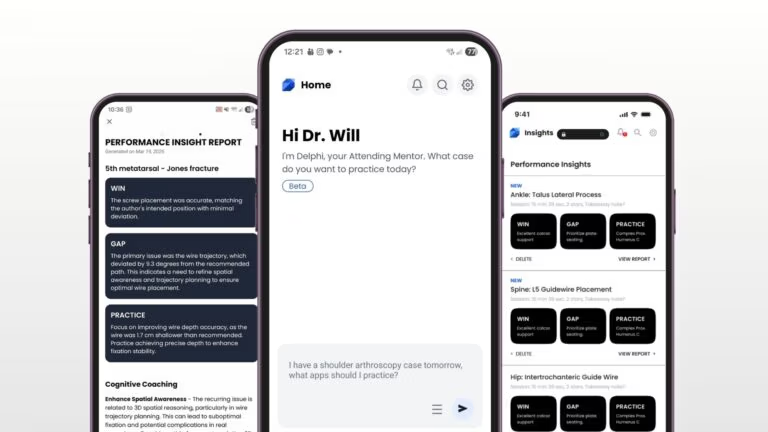
Turning Practice Into Measurable Improvement
Surgical training has a familiar problem: learners are motivated, but the system rarely makes it easy to translate motivation into the right practice, at the right time, with the right feedback, and the right next step. In our April release, we have intentionally redesigned PrecisionOS around learning science to address this specific issue.
March 31, 2026
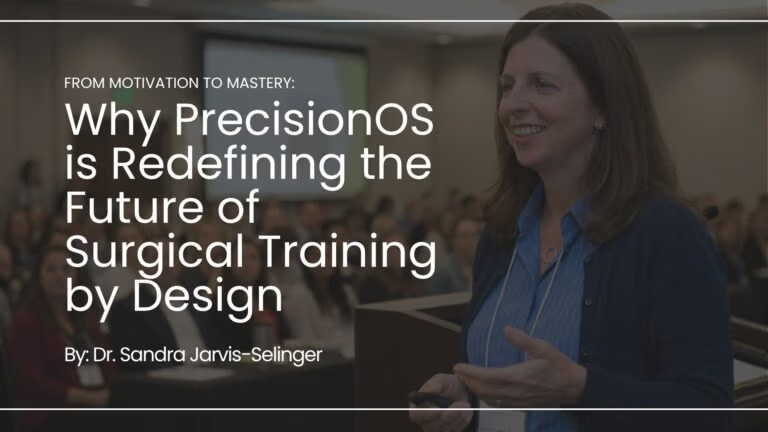
Why PrecisionOS is Redefining the Future of Surgical Training by Design
April 1, 2026 - PrecisionOS’s recent announcement, “Turning practice into measurable improvement,” represents an important shift from providing a library of virtual reality content to building a deliberate coaching environment.
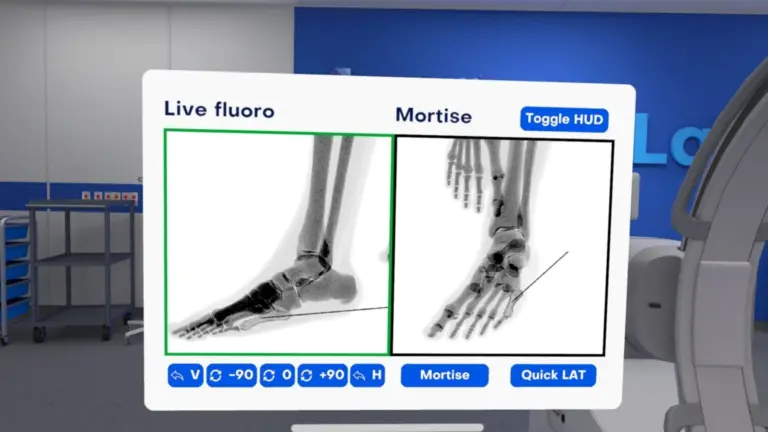
PrecisionOS Expands Into Podiatric Surgery
February 20, 2026 [Vancouver, BC]— PrecisionOS announced its formal expansion into podiatric surgical education, launching a case-based, just-in-time training Virtual Reality Fracture Lab featuring cases aligned with AACPM curricular recommendations.
Leading In The News

AAOS and FDA Town Hall: Emerging advances in AR, VR, and robotics reshape orthopaedic training and patient care
May 26, 2026 — At the AAOS 2026 Annual Meeting, clinical experts, industry leaders, and regulators from the Food and Drug Administration (FDA) discussed the evolving role of these tools during the AAOS/FDA Town Hall Symposium, “Augmented Reality, Virtual Reality, and Robotics.”
CNN Next Frontier: How we'll learn in 2050
The classrooms of the future will feature AI chatbots, "metaversities," VR\AR, and smart robots. CNN meets the innovators, educators and inventors bringing these new technologies to the next generation, including CEO and co-founder of PrecisionOS, Dr. Danny Goel.
June 14, 2023
The Key To Success In Medicine
I scrub in with my good friend and mentor, Dr. Danny Goel, who is an orthopaedic surgeon, educator and CEO of a virtual reality startup called Precision OS. We chat about the power of mentorship, how to achieve success in your career, and how he is using innovation and technology to introduce a whole new way of learning with his company, Precision OS.
February 21, 2022
Think Different: Do we really See One, Do One, Teach One?
Dr. Danny Goel Presents at Grand Rounds for Mass General Brigham. Mass General Brigham is an integrated academic health care system, uniting great minds to solve the hardest problems in medicine for our communities and the world.
December 22, 2023
Institutional Success
Real World Success Stories

Dr. Andrew Maeso
PGY-3 Orthopedic Resident Kettering Health | US Air Force (Active Duty Transition)

Dr. Ryan Lohre
Staff Surgeon | Massachusetts General Hospital (MGH) Shoulder & Elbow Surgery | MGH/Harvard Medical School
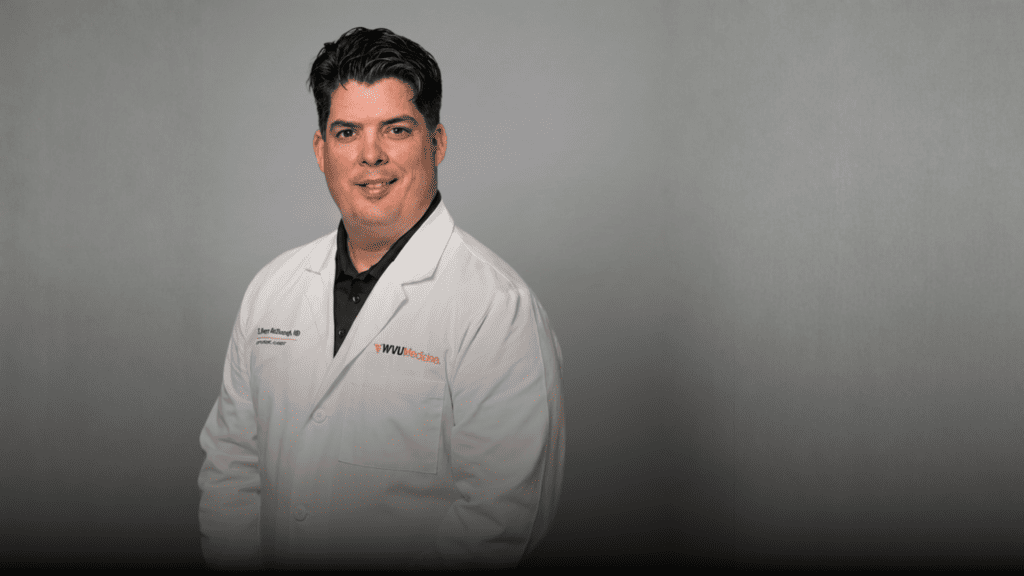
Dr. Barry McDonough
Program Director | Orthopedic Sports Medicine West Virginia University (WVU) School of Medicine

Dr. Ayooluwa Grabill
PGY-5 Orthopedic Fellow Western Michigan University | Kalamazoo, MI

Dr. Charlie Spieser
PGY-2 Orthopedic Resident Kettering Health Grandview | Dayton, Ohio
Impact Consortium Updates
The IMPACT Consortium is a collaborative initiative by PrecisionOS that integrates virtual reality (VR) into orthopedic residency training. It unites residency programs, educators, and technology partners to improve surgical readiness by replacing variable case exposure with structured, data-driven simulation training.
- Faculty-Optimized & Resident-Centered: Shifts foundational training to VR so faculty can focus mentorship directly in the operating room.
- Data-Driven Evaluation: Provides objective, granular insights into a resident’s performance and readiness to enhance curriculum.
- Collaborative Network: Programs share cases and best practices to build collective progress rather than working in isolated silos.
PrecisionOS IMPACT Consortium: Advancing Orthopedic Surgical Training with Virtual Reality
Join the PrecisionOS IMPACT Consortium panel—featuring Dr. Sandra Jarvis-Selinger, Dr. Danny Goel, Tanya Romanuk, and John Brack—as they explore innovative curriculum advancements integrating virtual reality (VR) into orthopedic residency education.
November 26, 2025
Dr. Sandra Jarvis-Selinger on the PrecisionOS IMPACT Consortium | Full Interview | Impact Series
Join Dr. Sandra Jarvis-Selinger for an in-depth conversation tracing her evolution from developmental psychologist to a forefront innovator in surgical education. She highlights the power of embedding these innovations throughout the training journey to transform not only medical education but also clinical practice.
Driving Innovation in Surgical Education: The Impact Consortium & VR Training Initiative Discussion
Dr. Jarvis-Selinger shares her vision of embedding these innovations progressively throughout residency and fellowship, shaping professional identity, fostering lifelong learning, and making best practices seamlessly part of clinical culture.
Leadership & Industry Insights
PrecisionOS Talks Series
VR Professor: ACL Reconstruction with Dr. Alan Getgood
Led by renowned expert Dr. Alan Getgood and chaired by Dr. Laurie Hiemstra, with co-hosting by Dr. Liana Tedesco and Dr. Danny Goel, MD.
August 29, 2025
Surgical Training In Virtual Reality. PrecisionOSTalks with Scott Sigman, MD
PrecisionOS speaks with the incomparable Scott Sigman MD.
September 20, 2023
PrecisionOS SPRICHT: Interview mit Dr. Ruth Delaney
PrecisionOS talks with Dr. Ruth Delaney, an orthopedic surgeon in Dublin and one of our advisory board members
May 16, 2023
Building Community Through Virtual Reality. PrecisionOS Talks with Dr. Shariff K. Bishai
Dr. Bishai is an Orthopedic Surgeon Fellowship Trained in Sports Medicine, Arthroscopy, and Shoulder Surgery
September 22, 2023
A Paradigm Change In Education.PrecisionOS Talks with Dr Bamberger
PrecisionOS speaks with Dr. Bamberger, who specializes in hand and upper extremity surgery as well as microsurgery. He is especially interested in treating all ailments of the elbow.
21. September 2023
The Evolution Of Surgical Education. PrecisionOS Talks with Dr Laurie Hiemstra
PrecisionOS speaks with Dr Laurie Hiemstra, Orthopaedic Surgeon; Director of Research, Banff Sport Medicine Foundation; Professor, University of Calgary; Past President (2022-2023) - Canadian Orthopaedic Association.
September 20, 2023
Advice on Match Day. PrecisionOS Talks with Jamie E.Confino, MD
Advice on #MatchDay from Jamie Confino, MD, PGY-4 at Columbia University Irving Medical Center, who’s been conducting extensive research on PrecisionOS.
September 20, 2023
The Disruption of Surgical Education. PrecisionOS Talks with Dr. Jon Warner
How is PrecisionOS changing surgical education? We talked to Dr. Jon Warner – a renowned Shoulder Orthopedic Surgeon and a Professor of Orthopedic Surgery at Harvard Medical School.
September 20, 2023
VR Should Be Part Of The Curriculum. A PrecisionOS Talks with Dr.Javad Parvizi.
Dr. Javad Parvizi has trained 100's and impacted the lives of thousands around the world. Despite retiring from surgical practice, he continues to be a great mentor and advisor to PrecisionOS. His insights into the future continue to resonate.
September 20, 2023
PrecisionOS spricht mit Dr. Danny Goel. PrecisionOS-CEO
Talk with Dr. Danny Goel, PrecisionOS CEO about PrecisionOS's mission and vision. He digs into the problem of the absence of hands on training around the world.
September 20, 2023