

From box scores to the OR: why measurable performance data finally matters for how orthopedic surgeons learn, improve, and prove readiness.
Written by Danny Goel, MD, MBA, MSc, FRCSC
For decades, the world of sports has relied on clear, objective performance data to measure improvement. Athletes know exactly how many points Michael Jordan scored, how efficient he was on the court, and how his game compared to other greats of his era. In golf, we can see how many birdies Tiger Woods makes, how fast he swings the club, how far the ball travels, and which club he uses at each distance.
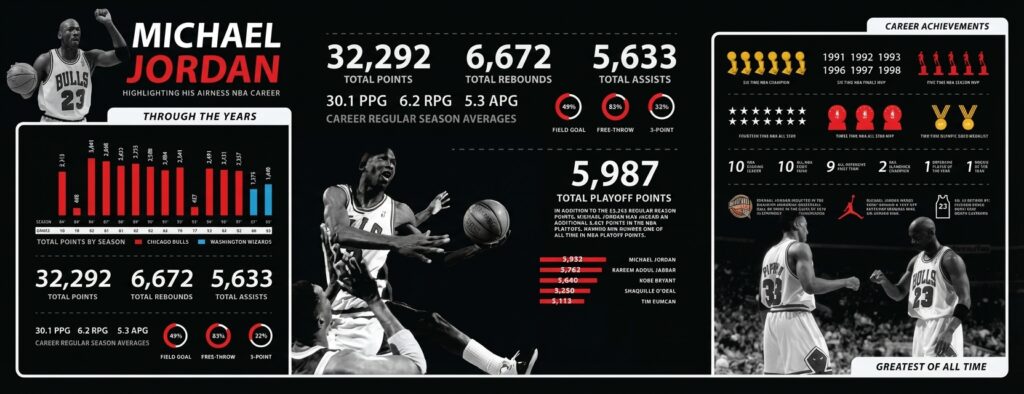
This kind of objective performance data does more than satisfy curiosity. It creates a shared language for improvement. Athletes don’t just feel like they’re getting better—they can prove it. They compare themselves to experts, identify gaps, and train with purpose.
In medicine, and especially in orthopedic surgery, objective performance data in surgery has never been this accessible.
The Missing Piece in Orthopedic Performance Data
Orthopedic surgeons have always trained hard. They learn from mentors, observe experts, and get feedback in the operating room. But most of that feedback has been subjective. It depends on who is watching, how much time they have, and how clearly performance can be remembered and described.
There has been no real equivalent of a box score for surgery. No reliable way to say, “Here is how my performance compares to an expert,” or “Here is exactly where I’m improving—and where I’m not.” In other words, orthopedic performance data y orthopedic skills assessment have historically been based on impressions rather than numbers.
That gap is finally closing.
Opening the Door to Objective Surgical Performance Analytics
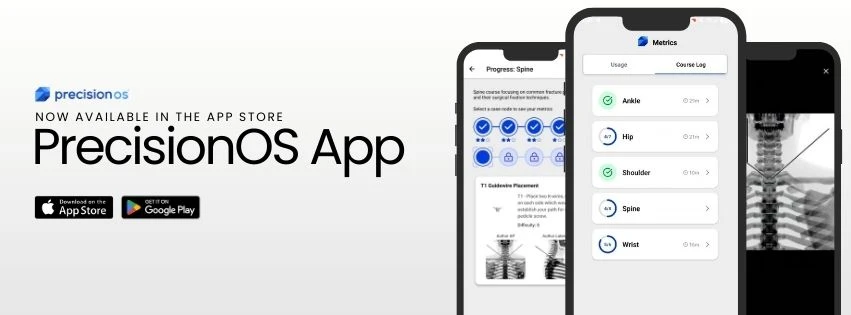
With modern performance analytics and immersive technology, data‑driven surgical training is now possible. Virtual reality surgical training platforms like PrecisionOS can capture rich, objective performance data in orthopedic surgical training.
Imagine completing a procedure in VR and instantly seeing measurable results:
- How efficient your movements were
- How consistent your technique was
- How your performance compares to expert benchmarks
This is not about judgment—it is about clarity. Instead of a vague sense that something was “off,” objective surgical feedback can show that an entry point was 3 mm medial and 2 mm superior to the ideal start, or that your fluoroscopy usage was higher than an expert’s average.
For the first time, surgeons can train the way elite athletes do:
- Practice in a controlled virtual environment
- Measure performance with real data through surgical performance analytics
- Compare results to expert standards
- Make targeted improvements based on orthopedic performance data
And because these mobile surgical performance metrics are accessible on a phone, they don’t stay locked in a lab. They follow the learner. Residents can review them on the go, track progress over time, and share results with faculty or mentors to guide focused coaching.
From Subjective Opinions to Data‑Driven Orthopedic Training
This shift unlocks something powerful for orthopedic surgical training. When performance becomes measurable, improvement becomes intentional. Training moves from “I think I’m better” to “I know where I’m better—and where I need work.”
Objective, VR‑based orthopedic skills assessment does not replace surgical judgment or experience. Instead, it strengthens both by adding a consistent layer of objective performance data in surgery. Just as sports analytics changed how athletes train and compete, surgical performance analytics in orthopedics can change how surgeons learn, refine skills, and ultimately perform in the operating room.
Residents gain confidence because they can see their numbers trending in the right direction. Educators gain visibility into engagement, repetition, and progression without adding more paperwork. Institutions gain a defensible, data‑driven way to demonstrate training quality and outcomes.
For a field built on precision, data‑driven orthopedic surgical training y objective surgical feedback feel long overdue. Now that the box score has finally arrived in the operating room, the next generation of orthopedic surgeons can train—and prove their readiness—with the same clarity athletes have relied on for years.
Sobre PrecisionOS
PrecisionOS is an award-winning medical software company redefining surgical training through virtual reality. Built by surgeons for surgeons, PrecisionOS empowers healthcare teams around the world with immersive, measurable, and patient-centered learning experiences.
info@precisionostech.com
www.precisionostech.com