Try the PrecisionOS Mobile App for FREE.  Jetzt downloaden

Der tugendhafte Wertezirkel für Chirurgen

Article Summary

Februar 5, 2019

In This Article:

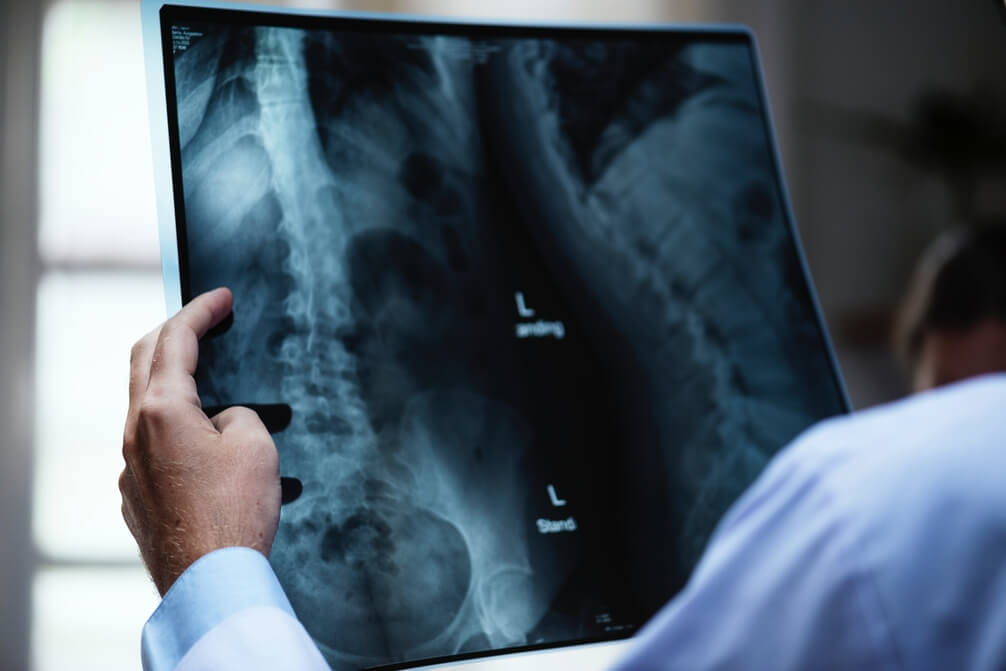
Doctor Holding Xray

Michael Porter ist der Meinung, dass sich das Gesundheitssystem in ein System verwandelt, das auf Wert statt auf Dienstleistungen basiert.

Auf dem Klinischen Kongress 2018 hat er drängte die Teilnehmer to “be leaders in this transformation, rather than be dragged along.” He believes such a transformation is necessary because healthcare costs are unsustainable: they’re rising faster than GDP and income in most developed countries.

Wie können also die Gesundheitskosten gesenkt werden? Porter stellt fest, dass inkrementelle Verbesserungen zur Kostensenkung nicht erfolgreich waren. Stattdessen plädiert er für eine Umstrukturierung des Gesundheitswesens hin zu einem einzigen Ziel: Wertsteigerung für Patienten.

Präzisions-Betriebssystem partner, Jon “J.P.” Warner M.D., believes healthcare providers should learn from Porter’s Tugendhafter Wertekreis, die die Bedeutung des Volumens unterstreicht: Eine höhere Anzahl von Patienten mit der gleichen Erkrankung ermöglicht einen höheren Nutzen für die Patienten.

Volumen, Ergebnisse und Wert

Dr. Warner ist orthopädischer Chirurg an der Boston Shoulder Institute und Co-Autor eines im Arthroskopie Journal veröffentlichten Artikels zur Untersuchung der Beziehung zwischen Volumen und Ergebnissen im chirurgischen Bereich.

Er weist darauf hin, dass Untersuchungen zeigen, dass Anbieter mit geringem Volumen mit längeren Krankenhausaufenthalten, längeren OP-Zeiten, erhöhten Krankenhauskomplikationen und höheren Kosten verbunden sind. Er stellt jedoch auch fest, dass der Einfluss des Volumens auf die Ergebnisse in Fällen geringer ist, in denen eine orthopädische Facharztausbildung eine größere Exposition bietet (wie beispielsweise bei der totalen Hüft- und Knieendoprothetik).

Diese Ergebnisse legen nahe, dass die Festlegung eines Volumenschwellenwerts eine Möglichkeit ist, den Patienten einen besseren Wert zu bieten. Porter war der erste, der die Wertegleichung für effektive Pflege:

Wert = Ergebnis/Kosten

Um den Patienten mehr Wert zu bieten, müssen Gesundheitsdienstleister entweder die chirurgischen Ergebnisse verbessern oder die Kosten senken. Porter hat das studiert Wirkung des Operationsvolumens on outcomes and value in healthcare and proposed a “Virtuous Circle of Value” based on the volume of care (see figure below).
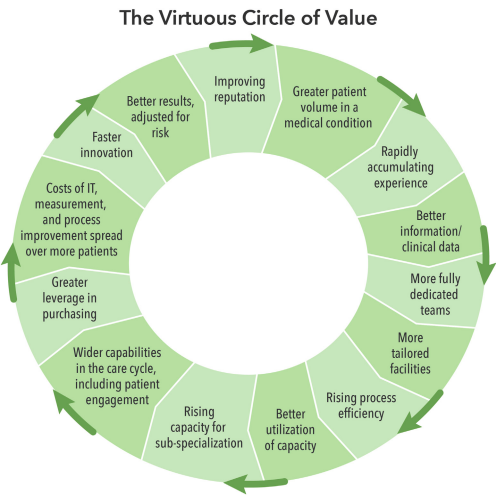
QuelleVolumen und Ergebnis: 100 Jahre Wertperspektive von EA Codman bis ME Porter, reprinted from Porter and Kaplan’s “How to pay for healthcare”.

Ein größeres Patientenvolumen führt zu einer positiven Feedbackschleife von Verbesserungen, beginnend mit mehr Erfahrung, besseren Daten, steigender Effizienz usw.

It’s important to note, however, that providers can begin at multiple points in the cycle: increasing volume is not the only way to increase value. Dr. Warner shows that systematische Bemühungen, Ergebnisse zu messen und zu verbessern kann auch zu besseren Ergebnissen führen.

Die Bedeutung der Messung von Ergebnissen

Porter bietet die Martini-Klinik in Deutschland als Beispiel für einen Gesundheitsdienstleister, der den Virtuous Circle of Value verinnerlicht hat.

They created “a hospital within a hospital” that integrates all the elements of care and, most crucially, supports the systematic measurement of outcomes to determine which surgeons are underperforming. When an underperformer at the Martini Klinik is identified, they receive mentorship from better-performing surgeons. As a result, outcomes quickly improve up to the required benchmark.

Insgesamt weist die Martini Klinik deutlich geringere Komplikationsraten auf als vergleichbare Anbieter. Daher kann das Volumen wichtig sein, aber auch die systematische Messung der Ergebnisse. Forschung durchgeführt von Dr. Shahian bestätigt, dass die Messung des gesamten Behandlungsprozesses, von der präoperativen Entscheidungsfindung bis zur Operation und Nachsorge, die Ergebnisse dramatisch verbessern kann. EA Codman würde dem zustimmen.

In Krankenhauseffizienz, Codman schrieb:

“To effect improvement, the first step is to admit and record the lack of perfection. The next step is to analyze the causes of failure and to determine whether these causes are controllable.”

Dr. Warner kommt zu dem Schluss, dass, obwohl das Volumen eine Rolle bei der Bestimmung des Werts spielt, die Messung von Ergebnissen und Verbesserungen auf der Grundlage dieser Messungen noch wichtiger ist.

Dr. Warner believes measuring outcomes will become even more important as hospitals move to alternative payment models – and there have already been proposals for the creation of insurance bundles in shoulder arthroplasty and rotator cuff repair. For example, in 1994, Johnson and Becker proposed and delivered a warranty on outcomes for a zweijährige Pilotstudie zur Arthroskopie und gelang es, die Gewinnspannen für das Krankenhaus und den betroffenen Chirurgen zu erhöhen.

Es hat sich gezeigt, dass der Fokus auf die Verbesserung der Ergebnisse statt auf die Bereitstellung von Dienstleistungen ein solider Weg ist, um Kosten zu senken und den Wert für die Patienten zu steigern.

Wert und Ergebnisse

Es besteht ein klarer Zusammenhang zwischen Volumen und Ergebnissen (wie im Virtuous Circle of Value gezeigt). Gesundheitsdienstleister können jedoch auch den Patientenwert durch einen speziellen Ansatz für Messung, Aufsicht und praktisches Lernen und Mentoring-Programme steigern.

Zurück zum Virtuous Circle of Value: Der Prozess der Messung und Verbesserung der Ergebnisse steigert auf natürliche Weise die Effizienz, verbessert die chirurgischen Ergebnisse und erhöht den Wert für die Patienten. Infolgedessen steigen die Patientenzahlen und Chirurgen und Krankenhäuser sehen mehr Gewinn.

Gesundheitsdienstleister können daher den Wert für alle steigern, indem sie einen Prozess des kontinuierlichen Lernens und der Verbesserung einführen.
Related Insights

Build Confidence For The OR, Now

Take your surgical preparedness to the next level with our immersive training ecosystem. Looking to scale your program? Request more info for your institution here.

Über PrecisionOS

PrecisionOS is a leader in virtual reality-enabled surgical education. Trusted by top academic medical centers, health systems, and professional societies worldwide, the company delivers an immersive, scalable training ecosystem designed by surgeons for residents and the next generation of healthcare professionals. By combining high-fidelity VR cadaver labs with on-the-go access via the Approaches mobile module and AI-driven performance reporting, PrecisionOS ensures surgeons are ready for the OR, today.

Häufig gestellte Fragen

Is there a step-by-step "Quick Start" guide for residents?

Yes—The Onboarding Course is your fastest path to proficiency. It walks you through account syncing, procedure selection, and your first virtual rehearsal step-by-step, ensuring you are “OR Ready” before you pick up the controllers.

Action: Follow the guided video path to standardize your learning experience.

Yes. PrecisionOS is compatible with Meta Quest 3, and 3s. If you already own a headset, you simply need to download the PrecisionOS Launcher from the App Store and sign in with your institution email and membership credentials.

Action: Download the launcher and log in.

Your Individual Membership is a month-to-month subscription ($99/mo) designed for residents who want 24/7 access to surgical rehearsal without a long-term contract.  Reach out for information about an institutional membership.

Action: Your card is billed every 30 days from the date of signup.

Hospital networks will often require a MAC address for device white-listing. You can find this in your Meta Quest headset settings under About > MAC Address.

Action: Reach out to provide your IT department with the MAC address found in your headset settings.

Both the headset firmware and the PrecisionOS app must be up to date to prevent technical glitches. Go to Settings > Software Update on your Quest and check the Launcher for app updates.

Action: Enable “Auto-updates” in your headset settings.

About The Author

Bild von Danny P. Goel, MD

Danny P. Goel, MD

Is the CEO of PrecisionOS and is a practicing surgeon and surgical educator. Dr. Goel currently practices in the Vancouver, B.C. area and also serves on the University of British Columbia’s Faculty of Medicine in the Department of Orthopedic Surgery.

He received his medical degree from the University of Manitoba, pursued his residency training in orthopedic surgery at the University of Calgary, and completed fellowship training in shoulder surgery at the University of Western Ontario and Harvard University.

Goel has co-authored more than 30 publications, and is widely sought as a presenter on surgical techniques.

21 Months of Automated VR Data

MAJOR ACADEMIC ORTHOPAEDIC RESIDENCY PROGRAM

How self-directed VR practice fills the seams of the clinical day and produces measurable learning trajectories—completely automatically.

Executive Summary:

Over a 21-month period, 30 orthopaedic residents integrated immersive VR into their training curriculum. With a simple, weekly requirement for residents to practice in headset, the platform seamlessly captured over 88,000 structured data points across 2,566 practice sessions. The resulting data proved that when residents have access to high-fidelity, frictionless simulation and are motivated, they will hone their skills and demonstrate clear performance improvements.

Frictionless Adoption: Practice doesn't compete with clinical time. The data revealed that 45% of all sessions happened organically during lunch breaks or on weekends.

Comprehensive Coverage: Usage wasn't limited to a single subspecialty. Residents attempted 61 distinct cases across 27 procedure modules, proving active engagement from Foundations & Anatomy to Complex Trauma.

Measurable Improvement: The platform didn't just track usage; it tracked skill acquisition. Across 288 scored playthroughs, longitudinal data showed a clear performance signal, with residents demonstrating an average positive learning delta of +0.36 over time.

download from the app store

Own Your Progress.

Download the PrecisionOS mobile app to access Delphi’s insight reports and turn every VR session into a springboard for future success.

Step #1

State Your Intent

Tell Delphi, your AI Attending Mentor, what you are looking to practice.

Step #2

Get Practice Recommendations

Based on your request, Delphi will suggest personalized VR apps and Video training.

Step #3

Queue Apps In VR

Tap Add to Queue and the VR app will be waiting for you in headset.

Step #4

Learn From Experts

Access the video library for expert-led Virtual Grand Rounds and discover surgical pearls from industry leaders and device experts.

Step #4

Practice With A Plan

Go through the recommended VR apps to gain the skills and repetition needed for success. 

Step #5

Review Performance Insights

After your VR session, review your personalized performance insight on your phone to maximine your OR success. 

Smiling businessman in blue suit and tie against gray background.

Dr. Andrew Maeso

Orthopedic resident

From Uncertainty to Execution

“You already have a plan, now you’re just executing it.”

The Story: Bridging the "Intern Gap"

Dr. Andrew Maeso recognizes the steep reality of residency: “As an intern, you are thrown into the fire.” For him, the hurdle wasn’t just the surgery—it was the invisible mechanics (positioning, X-ray angles, and workflow) that move too fast to learn in a high-pressure OR.

The Solution: Access Over Policy

By bringing the PrecisionOS ecosystem home, Dr. Maeso replaced passive YouTube watching with active mental rehearsal. This allowed him to arrive in the OR with the “steps” already hard-coded into his muscle memory.

The Game Changer: Personal headsets issued for at-home, 24/7 training.

Clinical Focus: Mastery of Antegrade Femoral Nails and Shoulder Arthroscopy.

Program Growth: Experience led to secured funding for all incoming residents.

Smiling man wearing glasses and checkered shirt in an office setting.

Roberto Oliveira

Founder

Over his 25 years in the gaming industry, Roberto Oliveira has been known for bringing stunning realism and high fidelity to interactive experiences.

He combines an art director’s artistic vision with solid business leadership, including experience in building art teams, creative team management, project planning, project management and business development.

Over the years, his talents have been showcased in projects for major publishers including Sony, Activision, Disney and Electronic Arts.

Business professional wearing glasses and a suit in an office setting.

Dr. Ryan Lohre

MGH Staff Surgeon

From Resident to MGH Staff Surgeon

“Prepare like it matters. Because in the OR—it does.”

The Story: The Currency of Trust

Dr. Ryan Lohre’s trajectory changed during a complex pediatric case that had already seen two failed attempts by tenured surgeons. While textbooks offered the theory, Dr. Lohre used VR to master the 3D spatial intelligence required to build a mental model of the deformity and navigate C-arm imagery in real-time.

The Solution: The 18-Minute Sandbox

The night before surgery, Dr. Lohre rehearsed the procedure four times in VR from his own home. This high-fidelity rehearsal allowed him to arrive in the OR functioning at 80-90% proficiency, compared to the typical 10-20% for a resident facing a new, complex procedure.

The Game Changer: 18 minutes of at-home VR prep for a complex pediatric case.

Clinical Focus: Spatial intelligence for C-arm interpretation and screw trajectory.

Program Growth: Transitioned from trainee to Staff Surgeon at Mass General.

Dental professional in white coat with PrecisionOS logo.

Dr. Barry McDonough

Program Director

Teaching with Surgical Efficiency

“I let the junior resident do more than ever before—and still finished on time.”

The Story: Reclaiming the OR

While at West Virginia University (WVU), Dr. Barry McDonough faced a universal challenge: balancing resident education with strict OR efficiency. By the time residents step into the OR, foundational skills like camera handling and triangulation should be second nature—not a distraction that slows down the case.

The Solution: Independent Preparation

Residents were assigned just 10 minutes of asynchronous VR training per week. This allowed them to master the “invisible” basics of arthroscopy on their own time. With an average of 17 sessions completed during the pilot, residents arrived with a mental roadmap that translated into immediate technical fluency.

The Game Changer: Asynchronous prep—residents train independently at home.

Clinical Focus: Mastery of triangulation, scope control, and anchor placement.

Program Growth: Model expanded across trauma, spine, and upper extremity.

Man in blue suit with glasses smiling in front of bookshelf.

Dr. Charlie Spieser

Orthopedic Resident

Mastering the Visuo-Spatial Gap

“VR practice shifts questioning from case generalizations to technique refinement.”

The Story: From Application to Confidence

Charlie Spieser highlights a universal resident hurdle: the high-stress transition from “book knowledge” to real-world execution. Early in training, the fear of making irreversible decisions can lead to hesitation. To bridge this gap, Charlie utilized VR as a daily resource for kinetic learning and anatomical association.

The Solution: Refining Spatial Intelligence

Unlike textbooks or passive videos, PrecisionOS allowed Charlie to practice high-stakes approaches—such as the anterior total hip—in a guided, 3D environment. This repetition provided a “safe sandbox” to identify why errors occurred, building the visuo-spatial confidence required to navigate complex anatomy before ever entering the OR.

The Game Changer: Daily Integration—normalized as an expected program resource.

Clinical Focus: Anterior Total Hip and Deltopectoral surgical approaches.

Program Growth: Nuanced Mentorship—shifting focus to specific faculty preferences.

Orthopaedic virtual reality training for junior residents in surgery.

Immersive Virtual Reality Training for a Junior Orthopaedic Surgery Resident

Andres D Maeso, DO, Michael R McDermott, DO, Jerrod A Steimle, DO

How consistent iVR training accelerates technical fluency and attending trust for first-year residents.

Executive Summary: This case study follows a first-year resident’s integration of immersive VR (iVR) into their surgical curriculum. By dedicating consistent training time to virtual modules, the resident was able to master procedural steps and receive real-time feedback in a risk-free environment before ever stepping into the operating room. The study highlights that this deliberate practice led to a “noticeable improvement in overall efficiency” and significantly increased the attending’s trust and confidence in the resident’s intraoperative capabilities.

Source Attribution: Immersive Virtual Reality Training for a Junior Orthopaedic Surgery Resident, Journal of Orthopaedic Experience & Innovation (2025).

Muscle Memory Development: The repetitive nature of immersive VR (iVR) training, combined with constant real-time feedback, allows technical surgical steps to become deep-seated muscle memory.

Measurable Efficiency Gains: Residents utilizing the platform observe a "noticeable improvement" in overall efficiency and technical proficiency when performing complex orthopedic procedures.

Accelerated Attending Trust: Preoperative rehearsal in a virtual environment significantly increases attending surgeon confidence, directly leading to increased autonomy for the resident in the operating room.

Professional man in business attire for PrecisionOS.

Danny P. Goel, MD

Geschäftsführer

A practicing surgeon and surgical educator, Dr. Goel currently practices in the Vancouver, B.C. area and also serves on the University of British Columbia’s Faculty of Medicine in the Department of Orthopedic Surgery.

He received his medical degree from the University of Manitoba, pursued his residency training in orthopedic surgery at the University of Calgary, and completed fellowship training in shoulder surgery at the University of Western Ontario and Harvard University.

Goel has co-authored more than 30 publications, and is widely sought as a presenter on surgical techniques.

Professional man smiling in a blue shirt for PrecisionOS About Us page.

Colin O'Connor

Founder

Colin O’Connor brings a proven track record as a business leader and entrepreneur, as well as expertise at developing cutting-edge technology to create immersive, high-fidelity experiences.

He has overseen and played key leadership roles in the highest echelons of the video game industry, founding companies and taking more than 16 top-tier titles to market.

He has worked at the forefront in innovating new rendering technologies in the areas of lighting, motion, particle graphics and shading that bring unprecedented realism to interactive experiences.

Step #1

Ask Delphi

Tell Delphi, your AI Attending Mentor, what you want to practice today.