Resource Hub
Explore the Clinical Validation and Innovation behind PrecisionOS
*Over 20+ peer-reviewed publications and institutional case studies.
Clinical Validation & Research
New Publications
Errors in implant orientation estimation in novice vs. experienced surgeons during reverse shoulder arthroplasty for a superior glenoid wear pattern
Lohre R, Bois A, Lapner P, Pollock JW, Athwal GS, Goel DP. Errors in implant orientation estimation in novice vs. experienced surgeons during reverse shoulder arthroplasty for a superior glenoid wear pattern. JSES International. 2025 Jan 16;9(2):100612. doi: 10.1016/j.jseint.2024.12.008.
Glenoid baseplate orientation in reverse shoulder arthroplasty (RSA) significantly influences clinical outcomes, complications, and failure rates. Novel technologies have been produced to decrease performance heterogeneity of low- and high-volume surgeons. This study evaluated the ability of both novice and experienced shoulder surgeons to accurately estimate glenoid component orientation in an intra-operative scenario. The research highlights the significant variability in visual estimation and underscores the critical importance of hands-on learning, skill transfer, and immersive technology to improve implant accuracy across all experience levels.
Opportunities for Remote Surgeon-to-Surgeon Education: A Novel Use Case for Immersive Virtual Reality
Lohre R, Goel DP, Williams J, Rahman O, Ochiai D. Opportunities for Remote Surgeon-to-Surgeon Education: A Novel Use Case for Immersive Virtual Reality. Journal of Orthopaedic Experience & Innovation. 2024;5(1).
Hip arthroscopy for the treatment of altered hip morphology contributing to femoroacetabular impingement syndrome (FAI) has been shown in large randomized trials to be beneficial and superior to conservative management. However, common complications are significant for low-volume surgeons, and the procedure is associated with an unexpectedly steep learning curve. This publication details how the addition of contemporary, immersive virtual reality (iVR) simulator education serves as an effective means for both novice and expert surgeons to master the complex, high-stakes tasks of hip arthroscopy, reducing anxiety and increasing technical efficiency prior to real-world operations.
The Evolution Of Surgical Education And Training
A evolução da realidade virtual na cirurgia do ombro e cotovelo
Lohre R., Athwal GS, Warner JP, Goel DP A Evolução da Realidade Virtual na Cirurgia do Ombro e Cotovelo. 2020. Journal of Shoulder and Elbow Surgery International. 2020, 4(2): 215-223
The use of virtual reality (VR) in shoulder and elbow surgery has varying levels of evidence, from I to IV, and typically involves educational randomized controlled trials. However, the terms and definitions used in the literature are often redundant, confusing, or outdated. The purpose of this review was to characterize previous uses of VR in shoulder and elbow surgery in preoperative, intraoperative, and educational domains, including trauma and elective surgery.
Effectiveness of Immersive Virtual Reality on Orthopedic Surgical Skills and Knowledge Acquisition Among Senior Surgical Residents
Lohre R, Bois A, Athwal GS, Lapner P, Pollock J, Goel DP. Efetividade da Realidade Virtual Imersiva em Habilidades Cirúrgicas Ortopédicas e Aquisição de Conhecimento entre Residentes Cirúrgicos Sênior: Um Ensaio Clínico Randomizado JAMA Network Open. 2020, 3(12):e2031217
Simuladores de realidade virtual imersiva (iVR) são de interesse crescente para treinamento cirúrgico. A eficácia do treinamento de iVR em comparação com o treinamento em vídeo na aquisição de habilidades complexas foi estudada usando um ensaio clínico randomizado e controlado por intervenção que incluiu residentes de cirurgia ortopédica sênior de várias instituições no Canadá durante um único curso de treinamento. O treinamento cirúrgico com iVR demonstrou eficiência de aprendizado, conhecimento e transferência de habilidades superiores.
Realidade virtual imersiva: uma mudança de paradigma em educação e treinamento
Ryan Lohre, MD e Danny P. Goel, MD, MSC, FRCSC, AAOS Now, “Immersive Virtual Reality: A Paradigm Shift in Education and Training”, janeiro de 2020.
O treinamento de cirurgiões aspirantes e estabelecidos permanece enraizado no modelo histórico de orientação junto com o aprendizado direto sobre os pacientes. No entanto, além do método clássico de aprendizagem halstediano de “ver um, fazer um, ensinar um”, existem outros métodos de aprendizagem bem pesquisados que a realidade virtual oferece. Aplicar poder de computação e gráficos modernos e altamente realistas cria um ambiente operacional envolvente que permite a repetição de procedimentos com variabilidade infinita. Os trainees testam suas habilidades, cometem erros, aceitam feedback, refletem e depois repetem até atingirem a proficiência. Isso tem o potencial para um aprendizado mais rápido e eficiente obtido por meio de maior experiência, criando um caminho acelerado para o domínio.
Realidade virtual em endoscopia vertebral: uma mudança de paradigma na educação para apoiar cirurgiões de coluna
Ryan Lohre, Jeffrey C. Wang, Kai-Uwe Lewandrowski, Danny P. Goel, J Spine Surg, "Virtual reality in spinal endoscopy: a paradigm shift in education to support spine surgeons", janeiro de 2020
Com os avanços tecnológicos no processamento de computador, o estado da simulação de realidade virtual para treinamento em neurocirurgia e cirurgia ortopédica continua a melhorar. Seu uso foi endossado por sociedades e organizações médicas, e há um crescente corpo de apoio na literatura médica. Uma revisão sistemática englobou 38 estudos separados que ilustram o uso de realidade virtual, realidade aumentada e realidade mista em uma ampla gama de procedimentos. Os estudos encontraram melhorias nas habilidades técnicas e nos resultados dos pacientes no acompanhamento de curto prazo.
Aquisição de habilidades complexas aprimoradas por realidade virtual imersiva
Lohre R., Bois A., Athwal GS, Goel DP CSES. Aquisição de habilidades complexas aprimoradas por realidade virtual imersiva: um teste controlado randomizado. J Bone Joint Surg Am. 2020, 102(6):e26
O objetivo deste estudo multicêntrico, cego e controlado randomizado foi determinar a validade e eficácia do treinamento de realidade virtual imersiva (iVR) na educação de residentes ortopédicos. O foco era alcançar a exposição ótima da glenóide. A URA demonstrou uma aquisição de habilidades técnicas e não técnicas de tradução substancialmente melhorada em relação ao aprendizado tradicional. Além disso, os resultados demonstram a validade de face, conteúdo, construto e transferência para iVR.
Competency-Based Surgical Training
Um estudo piloto para avaliar a validade de face e construto de um simulador de realidade virtual ortopédica
Feeley A, Feeley I, Merghani K, Sheehan E. Um estudo piloto para avaliar a validade de face e construção de um simulador de realidade virtual ortopédica. Prejuízo. 2021 julho;52(7):1715-1720. doi: 10.1016/j.injury.2021.04.045. Epub 2021, 16 de abril. PMID: 33926708.
This study aimed to identify the face and construct validity of the PrecisionOS trauma module proximal femoral nail procedure. Participants carried out a simulated proximal femoral nail on the POST immersive virtual platform following instruction on its use. The results demonstrated a statistically significant difference across all group’s novel performance, concluding the proximal femoral nail module on the PrecisionOS platform demonstrated good face and construct validity.
Realidade virtual imersiva no treinamento cirúrgico endoscópico e aberto da coluna vertebral
Lohre R, Kim, L, Wang, J e Goel DP. Realidade Virtual Imersiva no Treinamento Cirúrgico Endoscópico e Aberto da Coluna. Avanços Técnicos em Cirurgia Minimamente Invasiva da Coluna, Navegação, Robótica e Realidade Aumentada e Virtual. Natureza Springer. (no prelo)
Simulation in surgical education provides trainees with opportunity to acquire or retain skill. Skill in spine surgery may be defined as technical or non-technical – procedural knowledge and understanding. Research into effectiveness of simulator training shows that initial and incremental improvements eventually plateau. The ability of the simulator to provide efficient and effective training correlative to real world experiences defines the simulator’s transfer effectiveness of skills.
Resultados de oito anos de um Programa de Treinamento de Residência com Base em Competências em Cirurgia Ortopédica
Markku T. Nousiainen, Polina Mironova, Melissa Hynes, Susan Glover Takahashi, Richard Reznick, William Kraemer, Benjamin Alman, Peter Ferguson & The CBC Planning Committee (2018) Resultados de oito anos de um programa de treinamento de residência baseado em competência em cirurgia ortopédica, Professor de medicina, 40:10, 1042-1054, DOI: 10.1080 / 0142159X.2017.1421751
O uso de simulação no treinamento foi um elemento central de um programa de treinamento de residência piloto iniciado em 2009 pela Divisão de Cirurgia Ortopédica da Universidade de Toronto. Ele investigou a eficácia de um currículo baseado em competências (CBC) para um subconjunto de residentes, em comparação com uma abordagem estritamente baseada no tempo. A abordagem modularizada intensificou drasticamente os elementos de aprendizagem estruturados e o processo de avaliação. Oito dos 14 residentes que participaram concluíram seu treinamento de residência em quatro anos, em vez dos cinco tradicionais. Como resultado, a Divisão de Cirurgia Ortopédica tomou a decisão de adotar totalmente o CBC como o único modo de treinamento e avaliação no programa de treinamento de residência no ano letivo de 2013–14. No mesmo ano, o Royal College of Physicians and Surgeons of Canada determinou que todos os programas de especialização de pós-graduação no Canadá adotassem uma estrutura baseada em competências até o ano de 2022.
Eficácia do treinamento com VR
Preferência dos Representantes de Dispositivos Cirúrgicos para Aprendizagem Experiencial via Realidade Virtual Imersiva
Lohre R, Goel DP. Surgical Device Representatives’ Preference for Experiential Learning via Immersive Virtual Reality. Journal of Orthopaedic Experience and Innovation. 2022
O treinamento de RV imersivo é capaz de avaliar e rastrear o desempenho do aluno em SDR e é mais valorizado pelos SDRs do que os formatos de treinamento tradicionais. O custo de incorporação dessa tecnologia é 2,8 vezes menor que os atuais formatos didáticos e presenciais. Este é o primeiro estudo desse tipo a avaliar o uso de IVR na população SDR.
Aplicação inovadora de treinamento de simulação de realidade virtual imersiva
Lohre R, Goel DP, Leveille L. Nova aplicação de treinamento de simulação de realidade virtual imersiva: um relato de caso. JAAOS Global Research and Reviews. JAAOS Global Research and Reviews. 2021, 5(11):e21.00114
Há evidências crescentes para o uso de realidade virtual imersiva (iVR) na educação ortopédica. Vários ensaios clínicos randomizados demonstram melhor desempenho do estagiário em relação ao controle quando medido em avaliações análogas da sala de cirurgia. Este é o primeiro relato de caso demonstrando atendimento direto ao paciente após o uso de iVR. As implicações de custo-efetividade por meio da transferência de habilidades e segurança do paciente são destacadas.
Atenuando a deterioração da habilidade cirúrgica em ortopedia usando o aprendizado de simulação virtual
Lohre R, Warner JP, Morrey B, Athwal GS, Morrey M, Mazzocca A. Atenuando a deterioração da habilidade cirúrgica em ortopedia usando o aprendizado de simulação virtual JAAOS Global Research and Reviews. 2021, 5(10):e21.00193
The COVID-19 pandemic has interrupted orthopaedic training structures. Orthopaedic surgical skill decay can occur in days to months, depending on the initial skill level. Researchers determined skill decay mitigation strategies should use the best available evidence technologies and course structures that satisfy advanced learning concepts. The virtual curriculum, including immersive virtual reality (iVR) simulators, could provide cost-effective solutions to training.
Aprendizado real em um mundo virtual: como a RV pode melhorar os resultados de aprendizado e treinamento
Deloitte Insights, Real learning in a virtual world: How VR can improve learning and training outcomes, 2018.
Those tasked with training individuals to perform in high-risk environments face a conundrum: How can they deliver the benefits of learning from experience without the costs and dangers of putting trainees in those experiences? The answer is to recreate them using virtual reality (VR). VR presents immersive, realistic situations over and over again, building the expertise to deal with those situations before facing them in the real world. Research has shown that virtual reality reduces the time to learn while increasing the amount learned, while also improving long-term knowledge retention. In scenarios from food processing to handling dangerous industrial gases, VR is proven to promote better and faster learning. But where it truly comes into a class of its own, apart from other training methods, is when the body of knowledge to attain is complex.
O valor do treinamento cirúrgico de RV
Um simulador portátil de artroscopia do quadril demonstra boa validade de face e conteúdo com validade de construção incompleta
Feeley A, Turley L, Sheehan E, Merghani K. Um Simulador de Artroscopia de Quadril Portátil Demonstra Boa Validade de Face e Conteúdo com Validade de Construto Incompleta. Arthrosc Sports Med Rehabil. 17 de julho de 2021;3(5):e1287-e1293. doi: 10.1016/j.asmr.2021.05.009. PMID: 34712965; PMCID: PMC8527255.
O objetivo deste estudo foi avaliar a validade de face, conteúdo e construto de um módulo de artroscopia de quadril portátil em uma unidade ortopédica regional. O estudo concluiu que este simulador de artroscopia de quadril demonstrou validade de face e conteúdo aceitável. Os participantes relataram altos níveis de satisfação com o módulo. Além disso, o estudo é clinicamente relevante porque demonstra boa validade de face e conteúdo. A adição de feedback háptico em um simulador de artroscopia de quadril pode melhorar o aprendizado.
Tecnologias imersivas oferecem valor a curto e longo prazo
Lohre R, Morrey B, Goel DP. Tecnologias imersivas oferecem valor a curto e longo prazo. AAOS AGORA. 2020
The global orthopaedic community has seen profound changes in training and practice with the restrictions imposed during the COVID-19 pandemic. Surgical volume, practice management, and healthcare economics will see continued downstream effects, and travel restrictions have prevented surgeons from attending courses and conferences. This study reviews the impact on carbon emissions with the utility of virtual reality while delivering meaningful education and remote mentorship.
Realidade Virtual e Aumentada para Treinamento Cirúrgico e Simulação em Artroplastia de Joelho.
Lohre R, Goh G, Parvizi J, Goel DP. Realidade Virtual e Aumentada para Treinamento Cirúrgico e Simulação em Artroplastia de Joelho. Arquivos de Cirurgia Ortopédica e Traumatológica (AOTS), 2021. 141(12):2303-2312
Este artigo examina o papel das tecnologias de realidade virtual imersiva (iVR), realidade aumentada e realidade mista na artroplastia do joelho. Esse espectro de integração de tecnologia de realidade estendida permite que os cirurgiões visualizem a anatomia específica do paciente, melhorem o planejamento pré-operatório e forneçam orientação intraoperatória. Os autores concluíram que as tecnologias de realidade estendida têm uma infinidade de aplicações potenciais em cirurgia ortopédica.
Realidade virtual imersiva agrega valor aos programas de treinamento em cirurgia ortopédica
Goel, DP e Lohre, R. Realidade virtual imersiva agrega valor aos programas de treinamento cirúrgico ortopédico. Política de Gestão em Saúde e Inovação
A realidade virtual imersiva (URA) é uma inovação disruptiva que pode melhorar significativamente a qualidade do treinamento cirúrgico, ao mesmo tempo em que reduz os custos dessa educação. As evidências para IVR até agora mostram que, em comparação com o treinamento tradicional de biocompetências, IVR demonstra um efeito maior na melhoria de habilidades para estagiários cirúrgicos a um custo menor. O realismo inerente da experiência IVR pode substituir parcialmente o treinamento na sala de cirurgia, reduzindo assim os custos de oportunidade dos programas de treinamento.
O uso da realidade virtual imersiva (URA) na educação ortopédica pediátrica
Lohre, R., Verhofste, B., Hedequist, D., Jacobson, J., & Goel, D. (2022). The Use of Immersive Virtual Reality (IVR) in Pediatric Orthopaedic Education. JPOSNA®, 4(S1).
The traditional postgraduate surgical master-apprenticeship education model is undergoing a significant paradigm shift. For the past century, the transition from trainee to orthopaedic surgeon has been accomplished through stepwise integration of theoretical knowledge, observation of senior faculty, basic surgical skill acquisition, and gradual autonomy in complex procedures. Over the past decade, the explosion of virtual reality has heightened interest in this field for surgical residency training. The core principle of simulation training is “aprendendo fazendo” for acquisition and retention of surgical skills. It allows trainees to integrate theoretical knowledge with procedural skills in a risk-free setting prior to application in the operating room. Significant data supports the use of surgical simulation and virtual reality training modalities for skill acquisition in nearly every surgical specialty. The advancement in technology will allow immersive reality to become a standard educational platform in the future and this article provides a basic framework for understanding this ever-changing field.
Platform & Product Innovation
Video Walkthroughs & Technology in Action
Orthopedic Trauma - Medial Malleolus: App Walkthrough
A walkthrough video showcasing the medial malleolus case within the Orthopedic Trauma application. Virtual reality surgical simulation for ORIF of a medial malleolar fracture.
April 23, 2025
Delphi: The Anatomy Mentor in BodyWorks
Delphi, your AI Attending Mentor, transforms the BodyWorks environment into a highly interactive surgical mentor. Learn how you can utilize natural language voice prompts to master complex spatial intelligence.
April 23, 2025
Virtual Grand Rounds - Oct 2025 | Case Spotlight: Fibula transverse fracture plate
Welcome to the first episode of Virtual Grand Rounds, a webinar focused on teaching skills for Orthopedic residents - this first episode will focus on the skills of plating of a fibula fracture.
October 16, 2025
Software Releases & Announcements
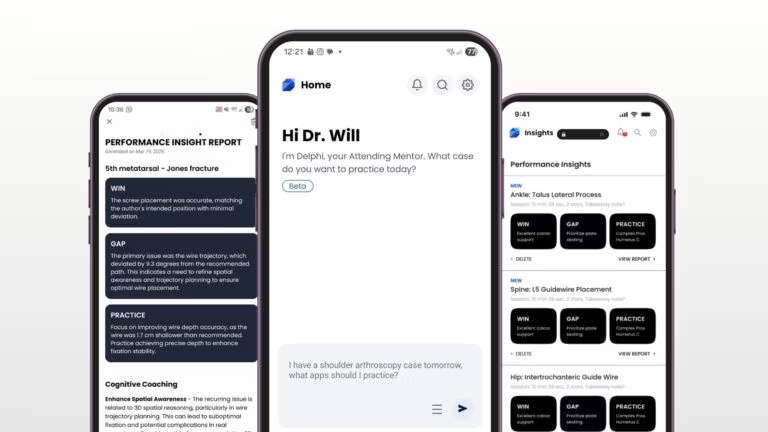
Turning Practice Into Measurable Improvement
Surgical training has a familiar problem: learners are motivated, but the system rarely makes it easy to translate motivation into the right practice, at the right time, with the right feedback, and the right next step. In our April release, we have intentionally redesigned PrecisionOS around learning science to address this specific issue.
March 31, 2026
Why PrecisionOS is Redefining the Future of Surgical Training by Design
April 1, 2026 - PrecisionOS’s recent announcement, “Turning practice into measurable improvement,” represents an important shift from providing a library of virtual reality content to building a deliberate coaching environment.
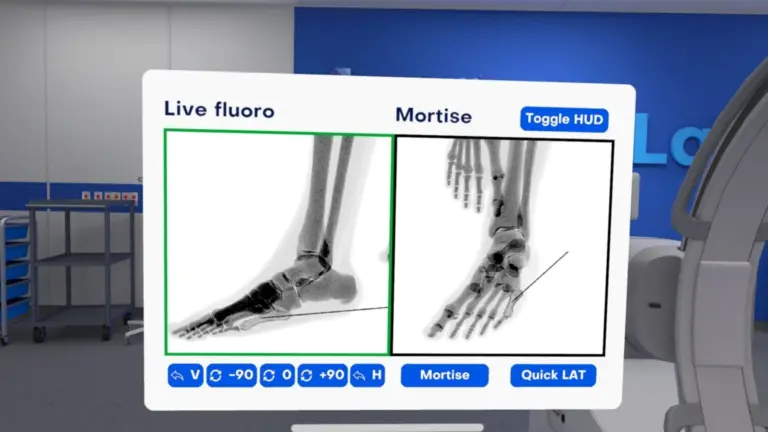
PrecisionOS Expands Into Podiatric Surgery
February 20, 2026 [Vancouver, BC]— PrecisionOS announced its formal expansion into podiatric surgical education, launching a case-based, just-in-time training Virtual Reality Fracture Lab featuring cases aligned with AACPM curricular recommendations.
Leading In The News

AAOS and FDA Town Hall: Emerging advances in AR, VR, and robotics reshape orthopaedic training and patient care
May 26, 2026 — At the AAOS 2026 Annual Meeting, clinical experts, industry leaders, and regulators from the Food and Drug Administration (FDA) discussed the evolving role of these tools during the AAOS/FDA Town Hall Symposium, “Augmented Reality, Virtual Reality, and Robotics.”
CNN Next Frontier: How we'll learn in 2050
The classrooms of the future will feature AI chatbots, "metaversities," VR\AR, and smart robots. CNN meets the innovators, educators and inventors bringing these new technologies to the next generation, including CEO and co-founder of PrecisionOS, Dr. Danny Goel.
June 14, 2023
The Key To Success In Medicine
I scrub in with my good friend and mentor, Dr. Danny Goel, who is an orthopaedic surgeon, educator and CEO of a virtual reality startup called Precision OS. We chat about the power of mentorship, how to achieve success in your career, and how he is using innovation and technology to introduce a whole new way of learning with his company, Precision OS.
February 21, 2022
Think Different: Do we really See One, Do One, Teach One?
Dr. Danny Goel Presents at Grand Rounds for Mass General Brigham. Mass General Brigham is an integrated academic health care system, uniting great minds to solve the hardest problems in medicine for our communities and the world.
December 22, 2023
Institutional Success
Real World Success Stories
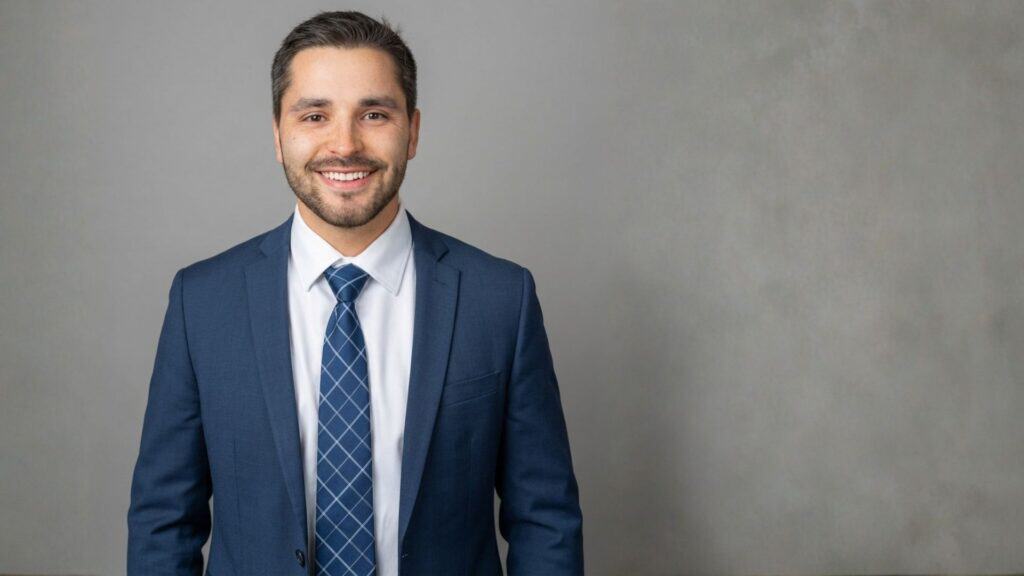
Dr. Andrew Maeso
PGY-3 Orthopedic Resident Kettering Health | US Air Force (Active Duty Transition)

Dr. Ryan Lohre
Staff Surgeon | Massachusetts General Hospital (MGH) Shoulder & Elbow Surgery | MGH/Harvard Medical School
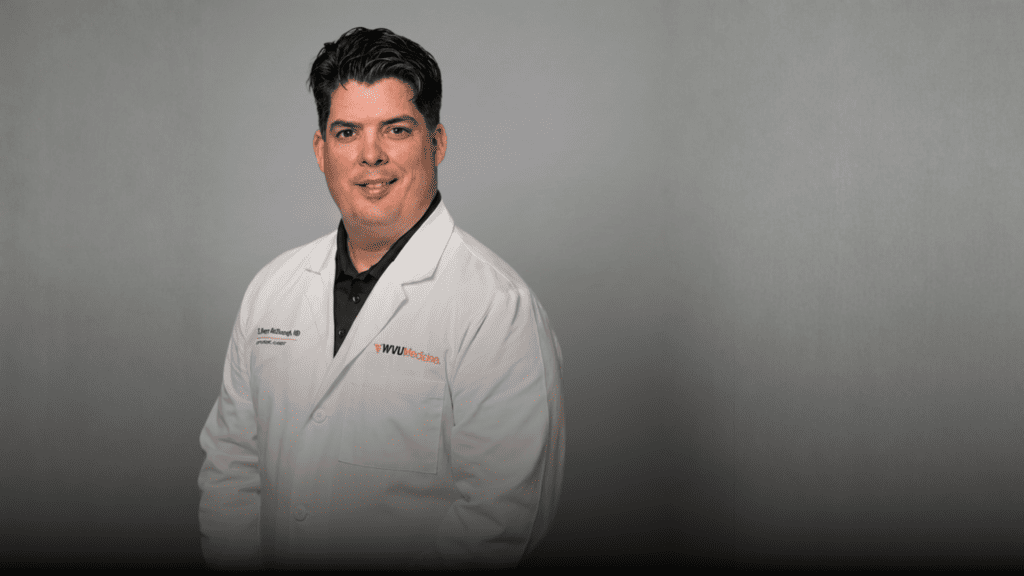
Dr. Barry McDonough
Program Director | Orthopedic Sports Medicine West Virginia University (WVU) School of Medicine

Dr. Ayooluwa Grabill
PGY-5 Orthopedic Fellow Western Michigan University | Kalamazoo, MI

Dr. Charlie Spieser
PGY-2 Orthopedic Resident Kettering Health Grandview | Dayton, Ohio
Impact Consortium Updates
The IMPACT Consortium is a collaborative initiative by PrecisionOS that integrates virtual reality (VR) into orthopedic residency training. It unites residency programs, educators, and technology partners to improve surgical readiness by replacing variable case exposure with structured, data-driven simulation training.
- Faculty-Optimized & Resident-Centered: Shifts foundational training to VR so faculty can focus mentorship directly in the operating room.
- Data-Driven Evaluation: Provides objective, granular insights into a resident’s performance and readiness to enhance curriculum.
- Collaborative Network: Programs share cases and best practices to build collective progress rather than working in isolated silos.
PrecisionOS IMPACT Consortium: Advancing Orthopedic Surgical Training with Virtual Reality
Join the PrecisionOS IMPACT Consortium panel—featuring Dr. Sandra Jarvis-Selinger, Dr. Danny Goyle, Tanya Romanuk, and John Brack—as they explore innovative curriculum advancements integrating virtual reality (VR) into orthopedic residency education.
November 26, 2025
Dr. Sandra Jarvis-Selinger on the PrecisionOS IMPACT Consortium | Full Interview | Impact Series
Join Dr. Sandra Jarvis-Selinger for an in-depth conversation tracing her evolution from developmental psychologist to a forefront innovator in surgical education. She highlights the power of embedding these innovations throughout the training journey to transform not only medical education but also clinical practice.
Driving Innovation in Surgical Education: The Impact Consortium & VR Training Initiative Discussion
Dr. Jarvis-Selinger shares her vision of embedding these innovations progressively throughout residency and fellowship, shaping professional identity, fostering lifelong learning, and making best practices seamlessly part of clinical culture.
Leadership & Industry Insights
PrecisionOS Talks Series
VR Professor: ACL Reconstruction with Dr. Alan Getgood
Led by renowned expert Dr. Alan Getgood and chaired by Dr. Laurie Hiemstra, with co-hosting by Dr. Liana Tedesco and Dr. Danny Goel, MD.
August 29, 2025
Surgical Training In Virtual Reality. PrecisionOSTalks with Scott Sigman, MD
PrecisionOS speaks with the incomparable Scott Sigman MD.
September 20, 2023
PrecisionOS TALKS: Entrevista com a Dra. Ruth Delaney
PrecisionOS taks with Dr. Ruth Delaney, an orthopedic surgeon in Dublin and one of our advisory board members
May 16, 2023
Building Community Through Virtual Reality. PrecisionOS Talks with Dr. Shariff K. Bishai
Dr. Bishai is an Orthopedic Surgeon Fellowship Trained in Sports Medicine, Arthroscopy, and Shoulder Surgery
September 22, 2023
A Paradigm Change In Education.PrecisionOS Talks with Dr Bamberger
PrecisionOS speaks with Dr. Bamberger, who specializes in hand and upper extremity surgery as well as microsurgery. He is especially interested in treating all ailments of the elbow.
September 21, 2023
The Evolution Of Surgical Education. PrecisionOS Talks with Dr Laurie Hiemstra
PrecisionOS speaks with Dr Laurie Hiemstra, Orthopaedic Surgeon; Director of Research, Banff Sport Medicine Foundation; Professor, University of Calgary; Past President (2022-2023) - Canadian Orthopaedic Association.
September 20, 2023
Advice on Match Day. PrecisionOS Talks with Jamie E.Confino, MD
Advice on #MatchDay from Jamie Confino, MD, PGY-4 at Columbia University Irving Medical Center, who’s been conducting extensive research on PrecisionOS.
September 20, 2023
The Disruption of Surgical Education. PrecisionOS Talks with Dr. Jon Warner
How is PrecisionOS changing surgical education? We talked to Dr. Jon Warner – a renowned Shoulder Orthopedic Surgeon and a Professor of Orthopedic Surgery at Harvard Medical School.
September 20, 2023
VR Should Be Part Of The Curriculum. A PrecisionOS Talks with Dr.Javad Parvizi.
Dr. Javad Parvizi has trained 100's and impacted the lives of thousands around the world. Despite retiring from surgical practice, he continues to be a great mentor and advisor to PrecisionOS. His insights into the future continue to resonate.
September 20, 2023
PrecisionOS conversa com Dr.Danny Goel. CEO da PrecisionOS
Talk with Dr. Danny Goel, PrecisionOS CEO about PrecisionOS's mission and vision. He digs into the problem of the absense of hands on training around the world.
September 20, 2023