

Written by Danny Goel, MD, MBA, MSc, FRCSC
In orthopedic training, there is an unspoken rule around high‑risk procedures: residents observe, assist, and retract, but rarely perform the most critical steps. Not because they are not capable, but because the margin for error is too small—no one “practices” placing a pedicle screw or navigating pelvic fixation on a live patient. You are expected to get it right the first time.
This creates a fundamental gap in residency training. Orthopedic residents advance with deep theoretical knowledge yet limited hands‑on experience in the moments that matter most, and many of these fellowship‑level skills are deferred until later in their careers. The result is predictable: anxiety, under‑preparation, and reliance on early independent cases to build confidence.
That gap is exactly what this FractureLab™ VR surgical training release is designed to close.
Bringing Spine and Pelvis Practice Into Residency
With this update, FractureLab enables residents to practice the highest‑stakes steps of orthopedic trauma safely, repeatedly, and with structure—before they ever do them in the OR. For the first time, trainees can step into realistic spine and pelvis training environments that mirror the operating room.
Residents can:
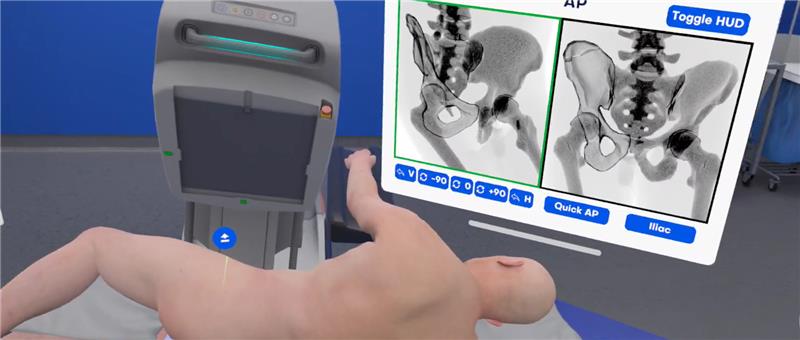
- Position the virtual patient and set up the OR field.
- Manipulate a live virtual C‑arm, practicing AP, lateral, and oblique views without radiation.
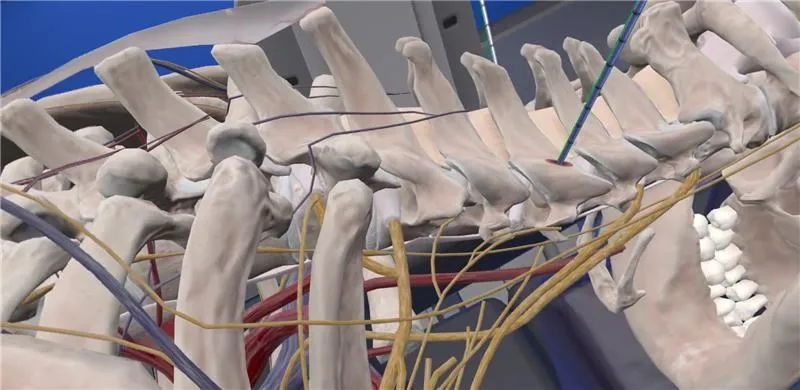
- Select entry points, drive wires, pins, and screws, then immediately verify their work against 3D anatomy.
Layers can be stripped away to show exactly where hardware sits relative to nerve roots, vessels, and joint surfaces, turning what was once a mental “black box” into something visible, repeatable, and intuitive.
From Endless Reps to Meaningful Feedback
Practice only matters if the feedback is clear. Instead of generic scores, the new FractureLab orthopedic trauma training release provides surgical‑grade performance metrics. After each case, residents can see:
- How far their entry point was from the ideal start.
- How their screw or wire trajectory deviated from the planned path.
- How closely they matched the case author’s strategy and sequence.
Every miss becomes an immediate learning moment, not a silent error. Over time, these objective metrics help residents turn repetition into reliable skill—and help programs track whether trainees are truly ready for high‑stakes steps.
Moving Essential Skills Earlier in Training
The goal is simple: the first time a resident performs a high‑risk step in the OR should never be the first time they have done it. By bringing VR spine and pelvis practice into residency, FractureLab moves essential skills to where they belong—early, structured, and safely repeatable.
This release is about replacing anxiety with preparation and uncertainty with muscle memory. It is about giving orthopedic residents a way to rehearse the hardest parts of surgery before patient outcomes are on the line, using virtual reality orthopedic trauma training built for real OR pressure.
About PrecisionOS
PrecisionOS is an award-winning medical software company redefining surgical training through virtual reality. Built by surgeons for surgeons, PrecisionOS empowers healthcare teams around the world with immersive, measurable, and patient-centered learning experiences.
info@precisionostech.com
www.precisionostech.com